Does Homeowners Insurance Cover Hail Damage to a Roof?
Does homeowners insurance cover hail damage to a roof? Learn what standard policies cover, what they exclude, and what roofers should tell homeowners.
By Toby Karamoutchev
· 3 min read
Does homeowners insurance cover hail damage to a roof? In most cases, yes. Standard policies typically cover storm damage from wind, hail, lightning, and the weight of snow or ice, while flood and sewer backup usually need separate coverage. After a storm, that distinction shapes what homeowners ask you, so it helps to know it well and to respond fast with a clear next step.
What to do this week after a storm hits your area
Start with the leads you already have. Homeowners in storm-affected neighborhoods are comparing roofers now, so a reply with a clear inspection offer is worth sending quickly. A generic "we'll be in touch" rarely works. Name a day, explain what the inspection covers, and say what you will document.
Then check that your public listings match the work you are doing. Your website, quote page and Google Business Profile should show storm and repair work clearly so people searching after a storm find you. Your site should make the next step obvious. For more on setting up those local pieces, see Roofing SEO: Set Up the Local Pieces First.
What standard homeowners insurance usually covers on a roof
Wind, hail, lightning and snow or ice weight
Standard policies generally cover storm damage to the roof from wind, hail, lightning, falling objects, and the weight of snow and ice. Kin's guide to storm coverage lists wind and hail damage to roofs, siding, windows and gutters as typically covered, along with interior damage that follows when wind tears shingles off and rain enters the attic.
Coverage is not identical everywhere. Fortune's explainer on storm damage notes that some insurers apply separate wind and hail deductibles or limit coverage for older roofs, and that some insurers require additional coverage for certain storm losses. So a covered hail claim does not always mean a full replacement with no out-of-pocket cost for the homeowner.
What homeowners insurance usually excludes
Flood and sewer backup
Flood damage is the big exclusion. Fortune's reporting on Hurricane Helene explains that most private insurers do not carry flood insurance, which leaves the National Flood Insurance Program run by FEMA as the primary provider for residential flood coverage. Check whether the policy covers water from rising water before assuming it does.
Sewer and drain backup is also commonly excluded. COUNTRY Financial's storm coverage guide lists flood, earthquake and sewer or drain backup as storm-related losses that standard policies do not cover, and Kin says sewer backup typically requires an endorsement. If a homeowner describes water in the basement after a storm, do not assume the roof claim will pay for it.
How the coverage question affects your roofing sales conversation
Coverage depends on the specific policy, so the homeowner should check with their own insurer. You are not in a position to say what a policy covers, and you should not promise an outcome on a claim. What you can do is explain the general pattern, then point them to their insurer and to your inspection findings.
Document the damage before you recommend repairs. Take dated photos of each slope, the gutters, and any soft spots or granule loss, and note the storm date if the homeowner knows it. For a detailed walkthrough of what to record first, see Metal Roof Hail Damage Documentation: What to Record First. Clear records help the homeowner and the adjuster, and they make your estimate easier to defend.
Turn storm leads into booked inspections
Homeowners who file a claim often want a roofer to inspect quickly and explain what they found. A fast written reply with a specific inspection window is worth prioritizing, along with a plain explanation of what you will check.
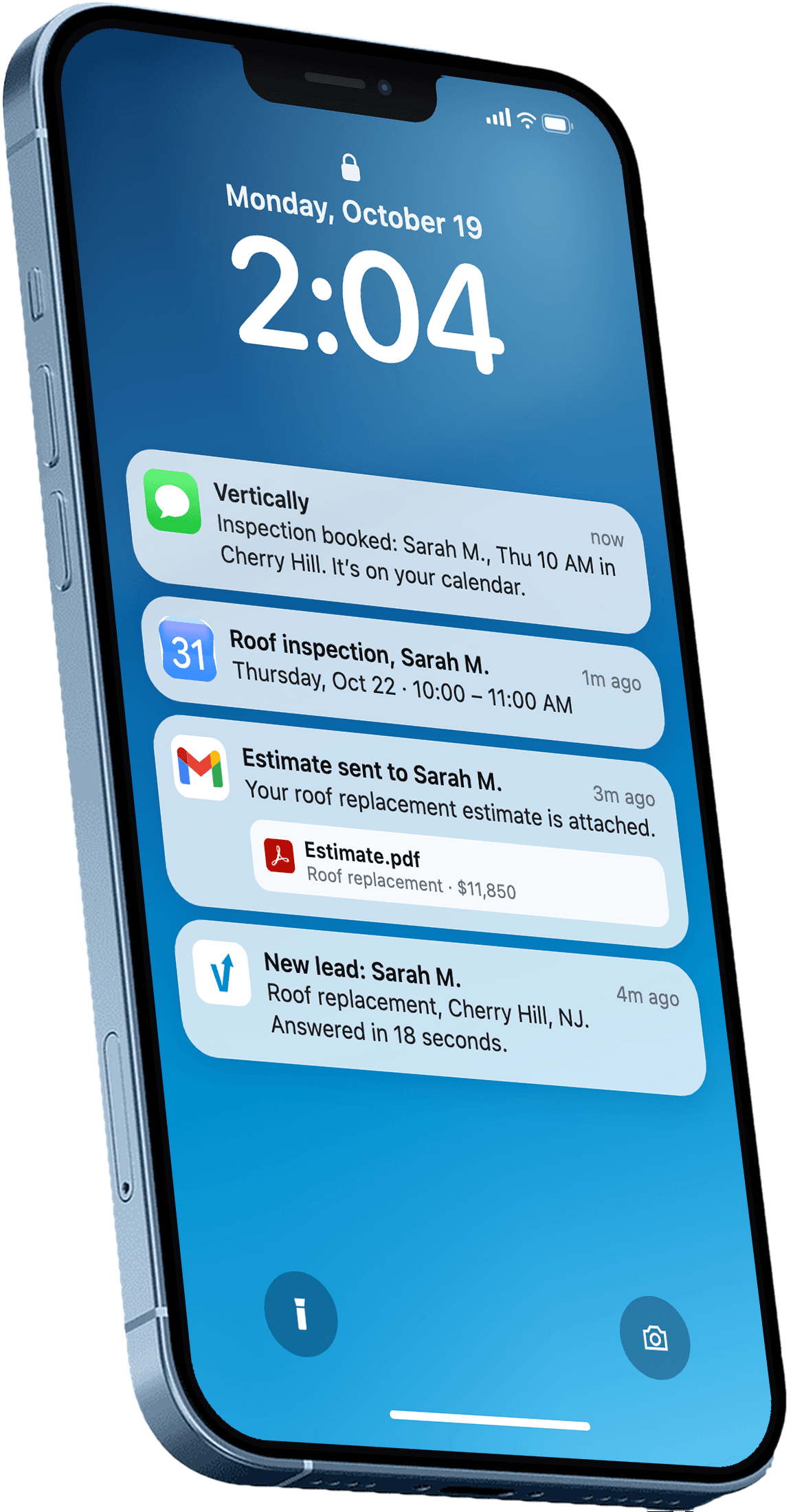
If your web leads come through your site, Vertically can send an instant quote and an AI call about 5 minutes later on your behalf, and it can book the inspection directly on your calendar. That covers the follow-up that storm leads often need, though you still run the inspection and the job. For the wider set of approaches, see How to Get More Roofing Leads (and Stop Losing the Ones You Have).
Recommendation
This week, pull every lead from storm-affected areas, reply to each with a specific inspection time, and write down what you will photograph. Then check that your site and listings describe the storm work you actually do. Vertically helps roofers answer web leads faster and book inspections without waiting on a callback, and you can book a free systems audit to see how it would work with your website and calendar.
Frequently asked questions
Does homeowners insurance cover hail damage to a roof?
Standard homeowners policies typically cover hail damage to a roof as a covered storm peril. Some insurers apply a separate wind and hail deductible or limit coverage for older roofs. The homeowner should check their own policy and talk to their insurer about their specific situation.
Does home insurance cover wind damage to a roof?
Standard policies generally cover wind damage to a roof, including shingles torn off by storms. In coastal or hurricane-prone areas, a separate windstorm or hurricane deductible may apply, and some policies exclude windstorm damage. Coverage depends on the policy and location.
Is roof damage from a hurricane covered by homeowners insurance?
Wind damage to a roof from a hurricane is often covered by a standard policy, though deductibles can be higher. Flooding from storm surge or rising water is usually excluded and typically requires separate flood insurance. Homeowners should review their policy for the exact terms.
What storm damage is not covered by homeowners insurance?
Flood damage is generally excluded from standard homeowners policies and usually requires a separate flood policy. Sewer and drain backup, earthquake damage, and damage from lack of maintenance or wear and tear are also commonly excluded. The specific exclusions depend on the policy.
Should I tell a homeowner to file an insurance claim after a storm?
You should not tell a homeowner whether to file a claim, since that depends on their policy, deductible, and the damage. A reasonable step is to suggest they contact their insurer and document the damage with dated photos. Your inspection findings can give them accurate information to decide.
Answer every lead in under 30 seconds.
Vertically replies to your leads, sends the quote, calls them, and books the inspection on your Google Calendar. Free for 30 days. No contract, no credit card.
Keep reading
- GuideRoofing SEO: Set Up the Local Pieces FirstRoofing SEO starts with your Google Business Profile, service pages and reviews. Here is the order to work through them this month, with sources.Read more
- GuideMetal Roof Hail Damage Documentation: What to Record FirstMetal roof hail damage claims often hinge on cosmetic exclusions and evidence. Here is what roofers should document before any repair work begins.Read more
- GuideHow to Get More Roofing Leads (and Stop Losing the Ones You Have)How to get more roofing leads: practical sources, then why speed to lead and follow-up decide how many you win, with a real roofing case study.Read more