Storm Season Call Overflow: 8-Step Checklist for Roofers
A storm season call overflow checklist for roofers: staffing, call routing, intake questions and follow-up to capture surge leads.
By Toby Karamoutchev
· 4 min read

Storm season call overflow for roofing companies usually starts the same way. A hailstorm passes through on a Tuesday afternoon, the phones ring through the evening, and by the next morning the company that answered first has its schedule filling up. Perceptionist's April 2026 storm season piece describes how a single storm can generate hundreds of roofing calls in 48 hours, and that the contractors who answer first book the jobs. This checklist walks through what to set up before the storm, how to handle the surge, and how to follow up afterward.
Why storm season call overflow hits roofers so hard
Storm calls arrive fast and in bunches. Hashlogics reports that call platforms serving the roofing trade see volume spikes of 300 to 500 percent within 72 hours of a major storm. The same source attributes to Goodcall's roofing data the finding that 62 percent of roofing calls go unanswered on a normal day. A two-person office that copes with a regular week can be overwhelmed within hours.
Homeowners also tend to call several contractors in a row and book whoever picks up. Talkroute's analysis cites research finding that 68 percent of post-storm homeowners chose the first roofing contractor who answered live. That makes the first few minutes of each call more valuable than almost anything else in your week.
How fast storm calls arrive
The surge front-loads. The first evening and the next morning carry most of the volume, then it tapers over about three days. Plan your coverage around that curve, not around an average day.
Storm season call overflow checklist: before the storm
Set up your phone and routing
- Decide who answers after hours and at peak. Name the people, the backup and the time windows. signpost.com/blog/best-call-management-for-roofing-companies) describes overflow rules that forward calls to a backup number, an answering service or a virtual receptionist once main lines are full. Set those rules before the season, not during it.
- Test the overflow path. Call your own main line several times at once and confirm where the second and third calls go. If they go to a voicemail nobody checks, fix that now.
- Keep a written availability list. List which inspection slots you can offer and when. Staff who can give real dates convert calls faster than staff who have to ask someone.
Prepare your intake script
Capture the details an insurance claim will need on the first contact. Hashlogics recommends collecting the carrier, the date of loss, whether a claim is already filed, visible damage and access notes. A caller who gives those details once is far easier to book than one who has to be called back.
Keep the script short. Under pressure, a long form slows everything down, so put the four or five must-have questions on one card by the phone.
Storm season call overflow checklist: during the surge
Triage calls fast
Separate active leaks from routine inspection requests before anyone is dispatched. Hashlogics describes the same triage step: an active leak may need a tarp crew now, while an inspection request can take a scheduled slot. Mixing the two wastes crew time and delays the callers who need help most.
Protect your existing jobs
Storm volume can pull attention away from customers you already have. Assign one person to keep active jobs moving, so current projects and crews are not left waiting while the phones take over.
Log every call with a status, such as new, booked, callback or lost, so no caller falls through the cracks. A spike strains phone systems and IT that were not built to scale, so a simple shared log matters more than it might on a normal week.
Storm season call overflow checklist: after the surge
Follow up on every unbooked lead
Storm leads need prompt attention. Run a follow-up pass within a day of the peak so no unbooked caller is left waiting. Send a text recap, offer the next open inspection slot and log each attempt.
Review what the surge exposed
Look at which calls were missed and at which hours had the most volume. Use that to adjust coverage for the next event. If most missed calls came in after 7pm, your overflow plan needs evening coverage. If intake notes were thin, tighten the script.
Where a roofing answering service fits and where it does not
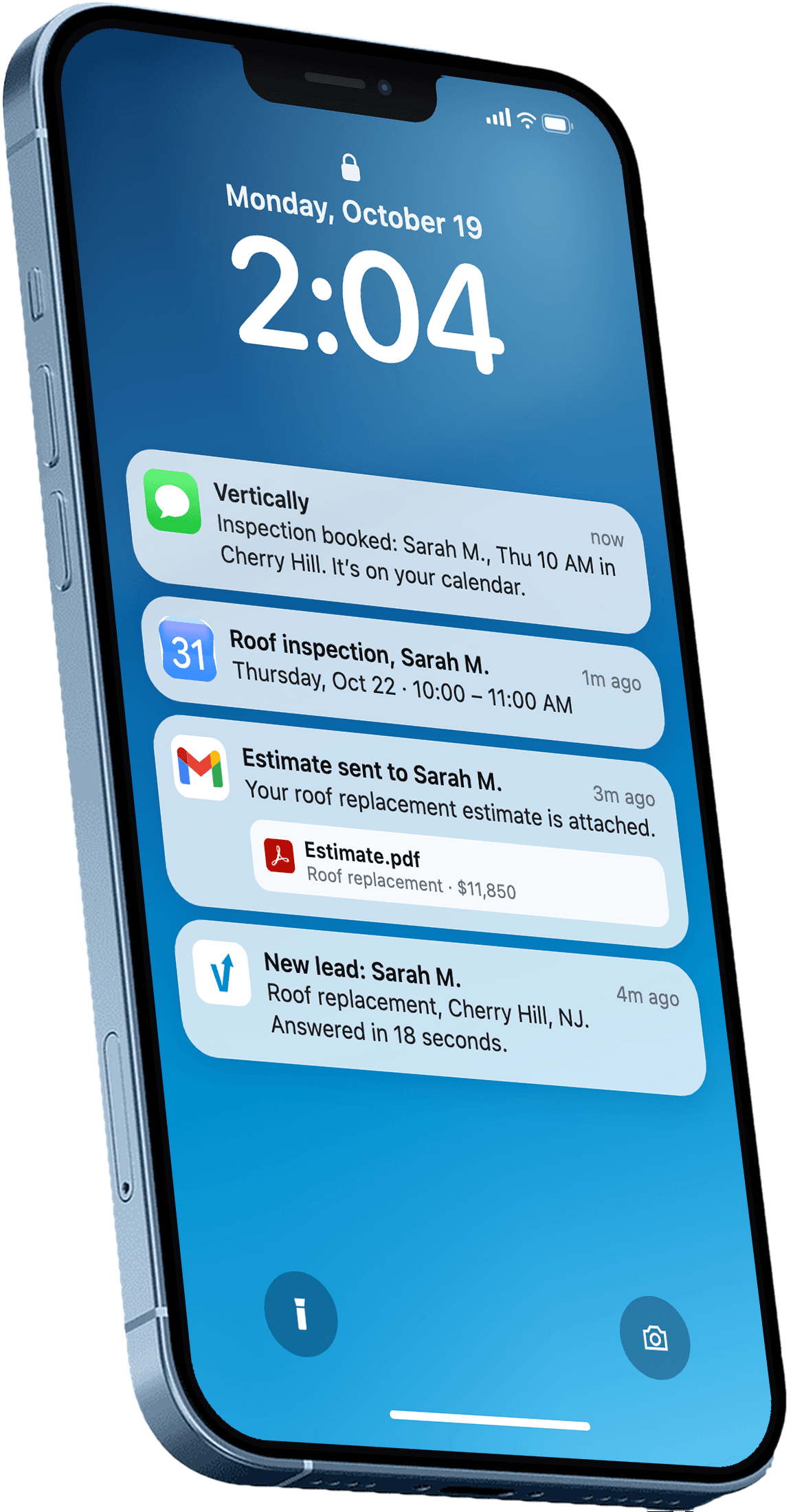
Some owners look for a roofing answering service to cover the surge. It helps to know what each option does. Vertically does not answer inbound calls to your business line. It responds to web leads instantly with a quote, a text, an outbound AI call about 5 minutes later, booking and follow-up, so fewer of those leads go cold. See roofing answering service vs instant lead response for how this compares to phone coverage.
For phone overflow, you still need a person or a phone-level tool, which the checklist above covers. For a fuller comparison of options, see What to Look for in a Roofing Answering Service Before You Sign.
Recommendation for this week
Before the next storm, run the checklist once with your own team. Confirm who answers after hours, test the overflow path with three simultaneous calls, and print the intake card. Those three steps take an afternoon and decide how much of a surge you keep. If you want help covering web leads during a spike, Vertically can run instant quotes and the follow-up call for your site's requests, so you spend storm week on inspections instead of inbox replies.
Frequently asked questions
How far in advance should a roofing company prepare for storm season call overflow?
Set up routing, overflow rules and your intake script before the season starts, because the surge can arrive within hours of a storm. Test the overflow path at least once so you know where a second or third call will land. Waiting until a storm is forecast leaves too little time to fix gaps.
Should I hire extra phone staff for storm season or use an answering service?
Hiring temporary staff for a few unpredictable days a year is hard to plan and often too slow for the first evening of a surge. Many owners use a backup number, an answering service or a call management tool for overflow, and keep their own team on triage and booking. Compare options on how well they capture the intake details your claims need.
What information should I collect on the first storm call?
Collect the caller's carrier, the date of loss, whether a claim is already filed, visible damage and access notes. These details help you triage the call and avoid a second round of questions. Keep the list short enough that staff can ask it in a few minutes.
How do I keep storm leads from going cold after the surge?
Run a follow-up pass within a day of the peak, offering the next open inspection slot and sending a text recap of what was discussed. Log each attempt so no lead is dropped. Review which calls went unanswered afterward and adjust coverage for the next event.
Answer every lead in under 30 seconds.
Vertically replies to your leads, sends the quote, calls them, and books the inspection on your Google Calendar. Free for 30 days. No contract, no credit card.