AI Receptionist vs Voicemail for Contractors: A Guide
Compare an AI receptionist vs voicemail for contractors. See what each does with after-hours and missed calls, and how to decide for your roofing company.
By Bogdan Stere
· 5 min read

Every roofer knows the call that goes to voicemail while the crew is on a roof, the office is closed, or a storm has just filled the phone. The real question for your business is not whether those calls matter, but what happens to them after they land in the inbox. This guide compares voicemail with an AI receptionist, shows how each handles after-hours and missed calls, and gives you a way to measure the gap in your own company this week. Disclosure: Vertically, which publishes this blog, makes one of the products discussed below, so weigh that as you read.
What Voicemail Actually Does to a Roofing Lead
Voicemail is the default for many roofers during active work hours and after close. It is always on, but nobody answers it in real time. The caller hears a recording and has to decide whether to leave a message and wait for a callback.
Many callers will not wait. One vendor-reported figure, from a company that sells AI phone answering, puts it at roughly four in five callers who reach voicemail not leaving a message and calling the next contractor, according to Eden's 2025 guide for roofers. Treat that as the view of a vendor, not an independent study. Your own call logs will tell you more.
The cost of a missed storm-damage call is not just the one job. Storm-damage callers often contact several roofers, and whoever answers first has an advantage. That is a lead lost to speed, not to price or quality.
How an AI Receptionist Handles the Same Call
An AI receptionist answers on the first ring, at any hour, and runs a short qualifying conversation. Vendors such as Auto-Respond describe asking about the type of damage, whether there is an active leak, roof age, whether an insurance claim is open, and the address for the inspection.
Vendors describe the next steps differently, so check each one. Auto-Respond's guide describes a system that escalates active leaks to an on-call crew and sends the owner a summary before the job starts. AINORA's 2026 guide describes writing estimate bookings into field service software and transferring genuine emergencies to an on-call number. These are product descriptions, so confirm what a specific tool actually does before you rely on it.
LynkedUp Pro's guide describes routing a mix of calls: AI for new leads when the office is busy or after hours, and people for pricing questions, insurance disputes, complaints, and existing customers with a job in progress. That split is a sensible starting point for most owners.
AI Receptionist vs Voicemail for Contractors: Side-by-Side
| Factor | Voicemail | AI receptionist |
|---|---|---|
| Hours covered | Always on, but no live answer | Many AI receptionists answer around the clock |
| Call capture | Caller leaves a message or hangs up | Caller is qualified during the call |
| Booking | Manual callback later | Can book against your calendar, if connected |
| Escalation | Next business day | Can transfer or alert an on-call person |
| Storm-day volume | Callers move on | Can answer many calls at once |
| Typical cost model | Varies by provider; compare quotes | Varies by provider; compare quotes |
Pricing and contract terms vary widely, so compare the actual quotes and read the terms before signing. Look for limits on minutes, setup fees, and how you can cancel. The answering service contract red flags for roofers guide lists the clauses that tend to cause trouble.
AI call handling is also one option among several. Live remote receptionists, traditional answering services, and virtual assistants all sit between voicemail and a full in-house team. A roofing virtual assistant vs AI receptionist comparison covers the trade-offs in more detail, and the what to look for in a roofing answering service checklist helps you test any provider before you sign.
How to Test Your Own Missed Call Volume This Week
You do not need a vendor to start. Pull one week of call logs from your business line and your phone system's missed-call history. Count every call that went to voicemail during work hours and every call that came in after close.
Next, mark what each missed call was about. Sort them into storm damage, active leaks, new quote requests, existing customers, vendors, and spam. The first three are the leads you are paying to get. Look at how many of those reached voicemail and how many were returned within the same day.
Then decide which calls must reach a person. A reasonable rule is that active leaks, safety concerns, and existing customers with a job in progress go straight to a human, while routine new-lead intake can go to an AI receptionist or a live service. Write that rule down before you talk to any provider so you can judge each option against it.
If you find that most of your after-hours leads are never returned, the case for some form of coverage is strong. If most calls are returned within an hour, voicemail may be working well enough and your effort is better spent elsewhere.
Where Vertically Fits (Optional)
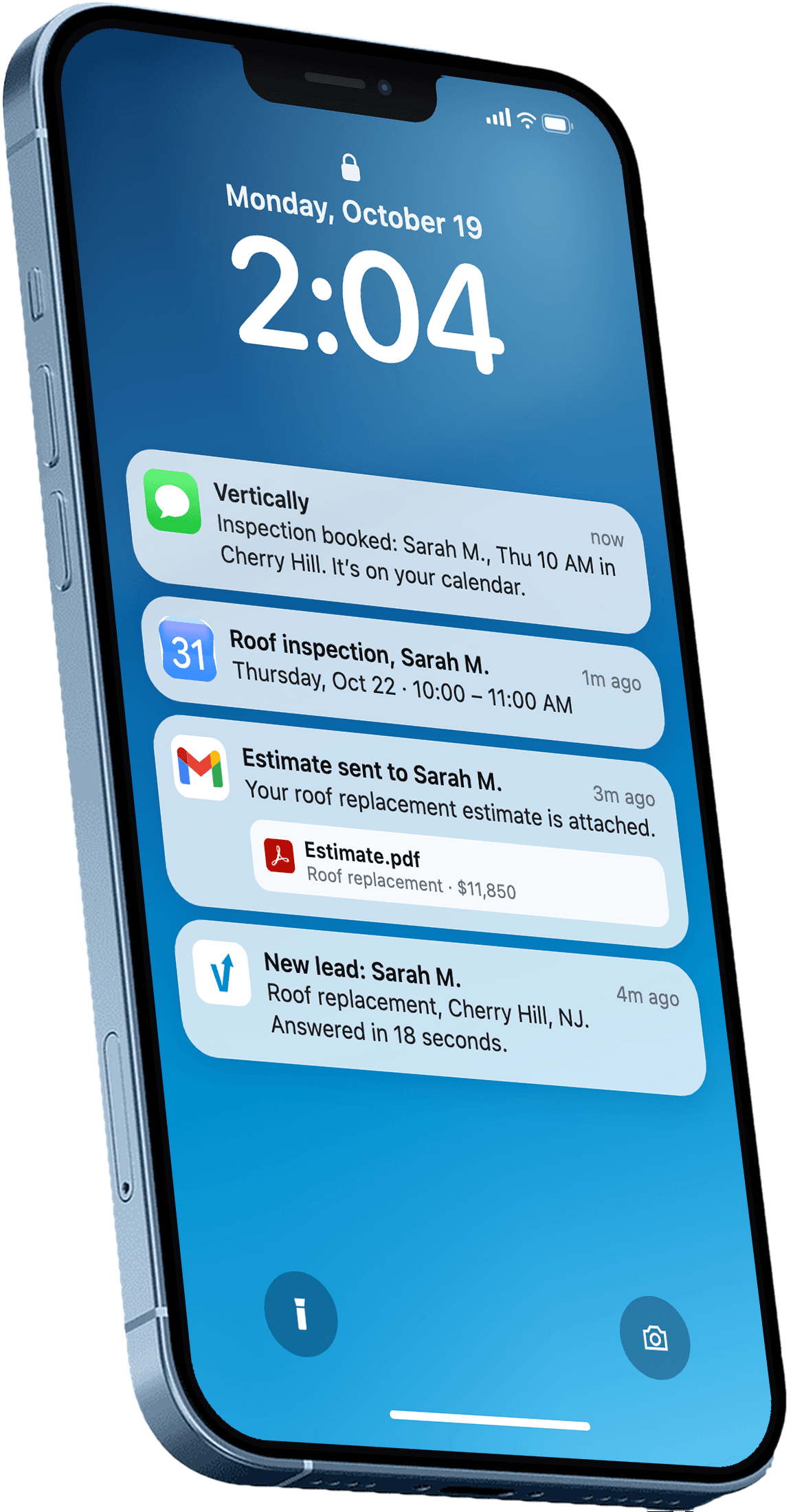
Vertically does not answer inbound calls to your business line. It works on web quote requests. A homeowner fills in your quote page, gets an instant quote by email, receives a text, and about 5 minutes later an AI call on your behalf can book the inspection on your Google Calendar. The roofing answering service vs instant lead response page explains that scope in full.
Recommendation: Measure Before You Choose
This week, count your missed calls, sort them, and check how many new leads went unreturned for more than a few hours. That number tells you whether voicemail is costing you work. If it is, shortlist two or three options that match your call volume and your hybrid rule, and ask each provider what happens on a storm night and a Sunday evening.
If your web leads are the part going cold, start a free 30-day trial of the quote page to see how instant quotes and the AI call about 5 minutes later handle them, with no contract or credit card required. You can also book a free systems audit to look at where your leads are slipping.
Frequently asked questions
Is an AI receptionist cheaper than a live answering service for a small roofer?
It depends on the provider and your call volume, and pricing models differ. Some AI receptionists are sold as subscriptions and some live services charge per minute or per call. Compare total monthly cost at your actual call volume, including setup fees and minimums, before deciding.
Will an AI receptionist handle emergency leak calls?
Some AI receptionist products are designed to detect emergency language and transfer the call or alert an on-call person. Not every product does this, so ask any provider exactly how emergencies are escalated and who gets the alert. Test it with a sample call before you rely on it.
Do callers actually leave voicemails?
Many do not. One vendor, Eden, reports that roughly four in five callers sent to voicemail do not leave a message, but that is a vendor-reported figure. Your own missed-call logs and callback records will show how your callers behave.
Can an AI receptionist book inspections directly on my calendar?
Some can, when connected to your calendar and given your availability rules. Booking depends on the specific tool and how it is set up. Confirm the calendar integration and how it handles double-booking before you sign up.
What should I check in a contract before signing with an answering service?
Look at the term length, cancellation rules, minimum fees, overage charges, setup costs, and who owns the call recordings and lead data. Also check how quickly you can change call scripts when your services or pricing change. A written checklist makes these terms easier to compare across providers.
Answer every lead in under 30 seconds.
Vertically replies to your leads, sends the quote, calls them, and books the inspection on your Google Calendar. Free for 30 days. No contract, no credit card.
Keep reading
- GuideAnswering Service Contract Red Flags for RoofersAnswering service contract red flags for contractors: the clauses, fees and promises to check before you sign, plus questions to ask any provider first.Read more
- GuideRoofing Virtual Assistant vs AI Receptionist: Which One Fits a Small Roofing Company?Roofing virtual assistant or AI receptionist? An honest comparison of cost structure, hours, speed, and what each can do, and when each is the better choice.Read more
- GuideWhat to Look for in a Roofing Answering Service Before You SignA practical checklist for choosing an answering service for roofing companies: coverage, speed, booking, quoting, handoff, pricing, contracts, data access.Read more