Answering Service Contract Red Flags for Roofers
Answering service contract red flags for contractors: the clauses, fees and promises to check before you sign, plus questions to ask any provider first.
By Bogdan Stere
· 4 min read

Before you sign an answering service contract, read it the way you would read a roofing proposal. Answering service contract red flags for contractors look a lot like the warning signs in any agreement you hire someone to perform: vague scope, unclear money, and promises that never make it onto paper. Most of the trouble shows up in the wording, before any calls are handled.
Vertically is the author's product, so keep that in mind as you read. This post is written to help you review any answering service contract, including ones from competitors.
The review is not complicated. You can run through a short set of questions on scope, pricing, cancellation and verification in under an hour. This post covers the clauses and sales behavior that signal trouble, and gives you a checklist to run before you commit.
Why answering service contracts deserve the same scrutiny as a roofing contract
Good contractor agreements spell out scope, pricing and terms in writing. Vague paperwork at the start often predicts later disputes. One installation-quality guide notes that warning signs of poor workmanship often appear during the communication stages, not the installation itself (Which contract or communication red flags predict future installation quality problems?).
Use the same line-by-line review you would give a roofing proposal. If a provider's written terms do not match what the salesperson described, that gap is the problem to resolve before you sign.
Contract red flags to check first
Vague scope and missing specifics. A proposal that describes the service without specifics leaves you exposed later. Look for named service hours, what counts as a handled call or lead, how messages are delivered, and what reporting you will receive. "Full-service support" tells you nothing you can enforce. Commercial roofing reviewers make the same point about proposals that do not name specific components: vague language can be a way to allow substitutions after the contract is signed (Red Flags in Commercial Roofing Proposals).
Pressure to sign quickly. Sign-today pricing and pressure tactics are a warning sign. One roofing contractor guide lists them among walk-away red flags (How to Choose a Roofing Contractor). If the salesperson pushes a deadline, ask for the terms in writing and sign after you have read them.
Clauses that avoid responsibility for the service. If the agreement disclaims responsibility for the very service you are paying for, you are buying something you cannot hold them to. One roofing contract guide says red flags appear when a contractor avoids responsibility for their work, and advises comparing every proposal line by line (How Do I Know If a Roofing Contract Clause Is a Red Flag or Not?).
Billing and cancellation terms that cost you money
Unclear fees, minimums and setup charges. Confirm how the service bills, whether there are minimums, and whether setup or onboarding fees apply. Get the pricing model in writing, including what triggers each charge. A roofing contract checklist recommends tying every payment to a defined milestone rather than an open-ended total, and the same logic applies here: know what you pay for and when (Roofing Contract Checklist: What to Include & Red Flags).
Cancellation and notice terms. Check the cancellation and notice period before you sign. You may need to exit if results do not match the promise, so find out how much notice is required, whether there is a termination fee, and whether an auto-renewal applies. Read renewal language closely, because it often sits in a short paragraph near the end.
Data and call records. Ask what happens to your customer data, call recordings and lead notes if you leave. The contract should say how you export them and how long the provider keeps them after cancellation.
Questions to ask any answering service before you sign
Verification and references. Ask for business registration details, insurance documentation where it applies, and references you can call. Apply the same verification habits you would use with a roofing contractor: request current certificates and confirm them directly with the listed agent or carrier rather than taking a card at face value.
Written performance terms. Ask what the service commits to in writing: response handling, call routing, message delivery and reporting. Then ask how you will check it. If the answer is "we'll make sure you're happy," that is not a commitment you can measure.
Plain answers. If a provider cannot answer these questions plainly, treat the slow or evasive reply as a warning sign. A good provider expects these questions.
A quick checklist before you sign
- Read every clause, including renewal and auto-renewal language.
- Compare the agreement line by line against what the salesperson promised.
- Confirm the scope, pricing, notice period and data-export terms are all written down.
- Verify business details and get at least one reference you can call.
- Only sign once every promise you care about is in the contract.
If you are still comparing options, what to look for in a roofing answering service before you sign goes deeper on the features and vendor questions, and per minute vs per call answering service pricing for roofers explains how billing models change what you actually pay.
Related reading: roofing answering service vs instant lead response.
Next step
Pull your current or proposed agreement this week and run the checklist above against it. Mark every clause that is vague, every fee you cannot calculate, and every promise that is not written down. Send those questions to the provider before you sign.
It sends an instant quote, a text, and an AI call about 5 minutes later to web leads, but it does not answer inbound calls. Vertically is free for 30 days with no contract and no credit card, and you can book a free systems audit to see whether it fits your lead flow.
Frequently asked questions
What is the most important clause in an answering service contract?
The scope clause matters most, because it defines exactly what the service handles and what counts as a completed call or lead. Next to it, the cancellation and notice terms decide how easily you can exit if results do not match the promise. Read both before you look at the price.
Is a month-to-month answering service agreement safer?
Month-to-month terms usually limit how long you are locked in, which lowers the cost of a bad fit. They do not make the service better, though, so you still need written scope and reporting. Confirm whether any setup fees or minimums apply even on a monthly plan.
Should I expect an answering service to guarantee results?
Be cautious about any provider that guarantees a specific outcome such as bookings or closed jobs, since results depend on many factors outside their control. A reasonable contract commits to defined service steps and reporting you can check. Ask what the provider will measure and how you will see it.
What should I do if the service does not match the contract?
Document the gap in writing, with dates and examples, and send it to the provider before taking further steps. Check the notice and cancellation terms in your agreement to see what exit options you have. If the dispute is large, have someone who reviews contracts for a living look at it.
Do I need a lawyer to review an answering service contract?
For a simple, month-to-month agreement with clear terms, many owners review it themselves using a line-by-line checklist. A longer contract with unusual liability language, large fees, or a long lock-in period is worth having a qualified attorney review. This is general information, not legal advice for your specific situation.
Answer every lead in under 30 seconds.
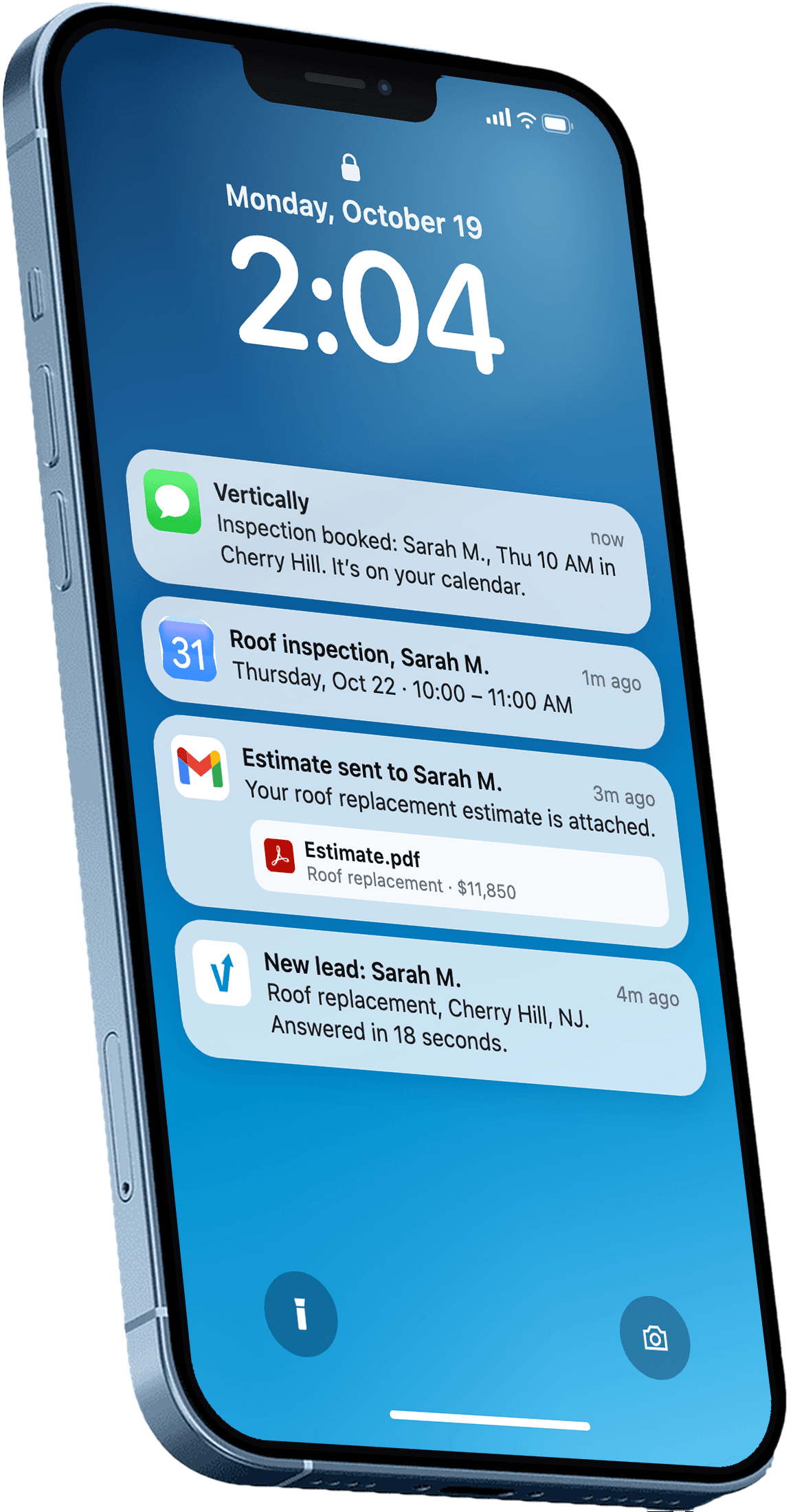
Vertically replies to your leads, sends the quote, calls them, and books the inspection on your Google Calendar. Free for 30 days. No contract, no credit card.
Keep reading
- GuideWhat to Look for in a Roofing Answering Service Before You SignA practical checklist for choosing an answering service for roofing companies: coverage, speed, booking, quoting, handoff, pricing, contracts, data access.Read more
- GuidePer Minute vs Per Call Answering Service Pricing for RoofersCompare per-minute, per-call and flat-rate answering service pricing for roofers, with storm-season overage math and what to check before you sign.Read more