Digital Marketing for Roofers: A Practical System
Digital marketing for roofers works best as one system: website, Google Business Profile, reviews, and fast lead response. Here is how to set it up.
By Toby Karamoutchev
· 4 min read
Digital marketing for roofers is not one tactic. It is a set of channels that have to work together: your website, local search, paid ads, reviews and how fast you follow up on a lead. Run them as separate projects and you spend money on each without seeing the jobs. Run them as one system and each piece makes the others pay off.
Most roofing companies still get the bulk of their work from referrals and storm work. com/blog/marketing-for-roofers-how-to-increase-leads-for-commercial-roofers-through-digital-marketing-channels/) reports that residential roofers it works with often get about 85% of business from referrals and storm work. Treat digital channels as support for those sources, not a replacement. The goal is to make sure a homeowner who searches for you, or who was referred and then checks you online, finds a clear reason to call.
What digital marketing for roofers actually includes
A practical setup covers five areas:
- Local search: your Google Business Profile and local content
- Your website: the page where a homeowner decides whether to call
- Paid ads: Google Local Services Ads and pay-per-click search
- Reviews: a steady flow of recent, specific customer reviews
- Lead follow-up: how quickly and consistently you respond
Why channels should work as one system
A search ad sends a homeowner to a page. If that page is slow, has no reviews and buries the phone number, the ad money is wasted. A strong Google profile gets someone to click, but if your website can't confirm your work, they leave. Reviews feed both. Each channel is only as good as the next step after it.
Set up the local foundation first
Local search is the cheapest place to start, and it is where most roofers have the biggest gap.
Google Business Profile
Local pages and location keywords
Add city and region terms naturally to your website copy, headings and meta tags. Geeklymedia's guide points to this as a basic local SEO step. Don't stuff the same phrase into every line. Write a page that names the towns you really serve, and say what you do there. For a deeper walkthrough of the local pieces, see roofing SEO: set up the local pieces first.
Your website as the conversion point
Your website decides whether a visit becomes a call. Propellant Media's 2025 blueprint lists the basics: mobile-optimized pages that load fast, clear calls to action like "schedule an inspection," and a before-and-after gallery.
Mobile speed and clear calls to action
Test your site on a phone, on a cellular connection, not just on office Wi-Fi. Check that the phone number is tappable from the top of the page and that the main button asks for the action you want. Keep forms short. Every extra field gives a homeowner a reason to leave.
Service pages segmented by job type
Split your services into separate pages: residential repair, replacement, inspections, commercial and storm damage. Each page should name the job, describe what it involves, and show project photos from that type of work. A single generic "services" page is hard to rank and hard for a homeowner to trust. For common mistakes on this, read roofing website design: 7 mistakes that cost you leads.
Paid channels: when ads make sense
Paid ads capture people who are searching right now, which matters most during storm season or when a roof starts leaking.
Google Local Services Ads and pay-per-click
Standard search ads give you more control over keywords and copy. Use them for specific, high-intent searches in your service area, and send each one to a matching service page, not your homepage.
Reading the cost of a lead
Before you raise your budget, work out what a lead costs and what it is worth. Take your average job value, your typical close rate and your cost per lead, and check whether the numbers work. Track which leads book and which don't, and cut the campaigns that don't pay off.
Reviews, social media and lead response
Asking for reviews after completed jobs
Reviews are a major trust signal. Geeklymedia notes that reviews shape consumer perception, and We Got U's 2026 analysis says homeowners now rely on search, reviews and social platforms when choosing a contractor. Ask for a review as soon as a job is finished, while the customer is still happy. Send a direct link to your Google profile, and post recent reviews on your website.
Responding to leads quickly
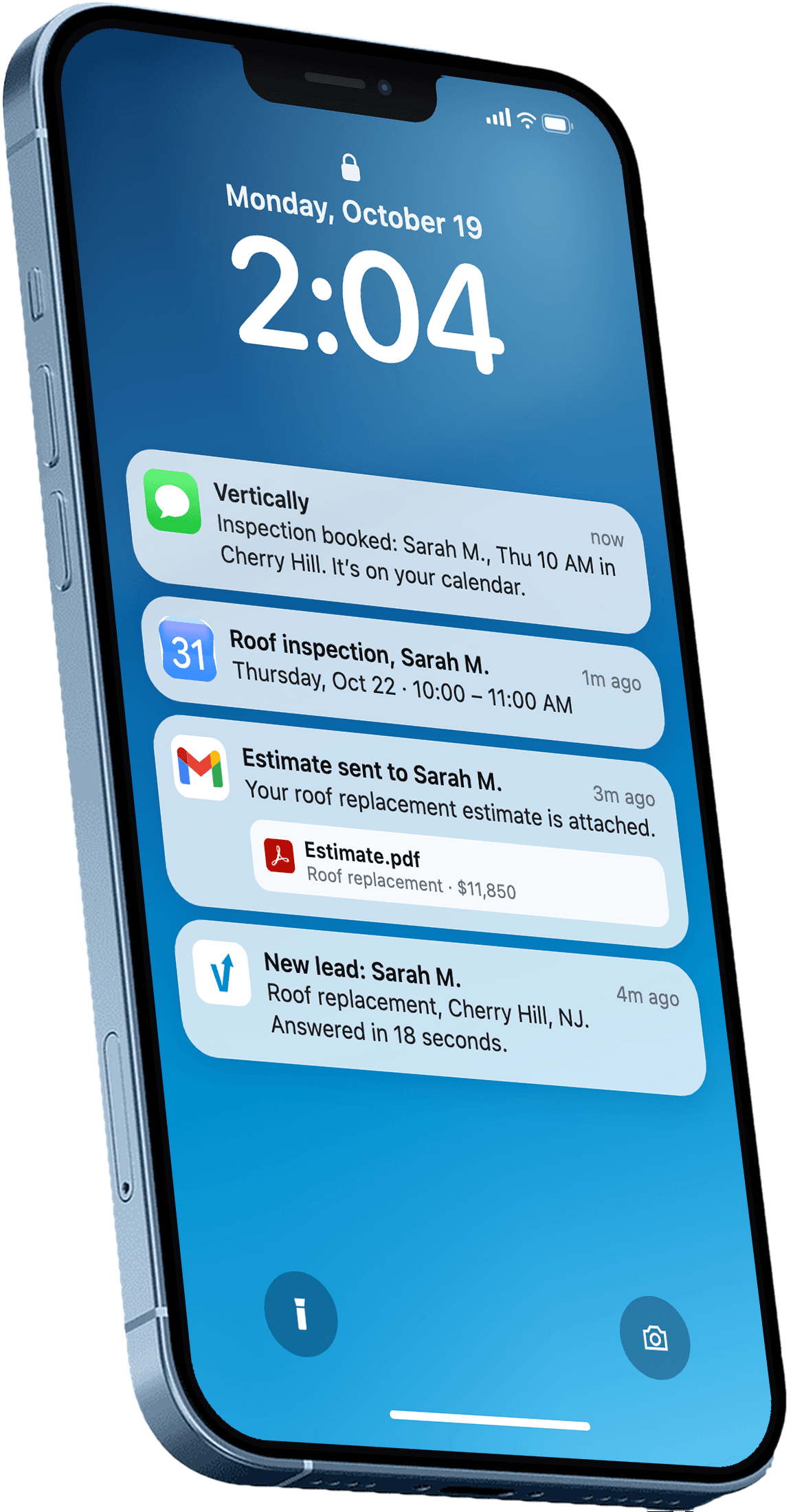
A slow reply can cost you a job, because homeowners often pick the first roofer who responds with a clear quote. Set a standard for how fast every inquiry gets a response, whether that is a call back, a text or an emailed estimate, and measure whether you meet it. Social media ads can build awareness over time, but they only pay off if the lead behind them gets answered.
What to do this week
- Audit your Google Business Profile. Check that every field is complete, your categories match your work, your service areas are accurate and your phone number matches your website.
- Test your website on a phone. Load your homepage and one service page on a cellular connection. Confirm the phone number is tappable and that the inspection call to action is visible without scrolling.
Pick one of these two and finish it before you start anything else. Local search and your website are the foundation for every other channel.
Recommendation for next steps
If your site already brings in leads, the next question is how quickly those leads hear back. Vertically is the author's product, and it is worth a short look if you want to see where your replies are slowing down. It builds a custom roofing quote page on your website that sends an instant estimate, and it places an AI call about five minutes later to book an inspection on your calendar. Book a free systems audit to see how your current lead flow compares.
Frequently asked questions
How much should a roofer spend on digital marketing?
There is no single right figure, and the sources here do not give one. Start by working out what a lead costs you and what a typical job is worth, then set a budget you can cover while you measure which channels bring in booked work. Increase spend only on channels that have shown a clear return.
Is SEO or paid ads better for a roofing company?
Paid ads bring in demand right away, while SEO builds lead flow over time. Most roofers benefit from both: ads cover urgent searches and storm periods, and local SEO lowers your cost per lead over the long run. Start with the foundation of your Google Business Profile and website before scaling ads.
How long does roofing SEO take to show results?
Results usually take several months. Speed depends on how competitive your market is and how complete your local profile and pages already are. Track your calls and form fills monthly to see the trend.
Do I need a website to market a roofing company online?
A website is the place where a homeowner decides whether to call, so most roofers need one. Even a simple site with your services, service areas, project photos and a clear phone number is far better than sending people to a profile with nothing to confirm your work. Make sure it loads fast on a phone.
What is the most important digital marketing channel for roofers?
For most roofers, the Google Business Profile and the website come first, because they support every other channel. Without an accurate local profile and a page that converts visitors into calls, paid ads and reviews have little to work with. Once those are solid, add reviews and paid campaigns.
Answer every lead in under 30 seconds.
Vertically replies to your leads, sends the quote, calls them, and books the inspection on your Google Calendar. Free for 30 days. No contract, no credit card.
Keep reading
- GuideRoofing SEO: Set Up the Local Pieces FirstRoofing SEO starts with your Google Business Profile, service pages and reviews. Here is the order to work through them this month, with sources.Read more
- GuideRoofing Website Design: 7 Mistakes That Cost You LeadsAvoid common roofing website design mistakes that hurt rankings and lead volume, from vague CTAs to slow pages and missing local details. Fixes included.Read more