How Instant Roof Quotes Work for Contractors (2026)
Learn how instant roof quotes work for contractors, what satellite-based tools measure, where they go wrong, and how to pick a quoting setup that protects.
By Bogdan Stere
· 5 min read
Instant roof quotes are online estimates that give a homeowner a price range within minutes of entering an address. For a roofing business, the appeal is speed: the homeowner gets a number while interest is high, and you get a lead with some project details already attached. Understanding how these tools build their numbers is the first step to deciding whether they help or hurt your margin. Disclosure: Vertically, which publishes this blog, makes one of the products discussed below, so weigh that as you read.
What an instant roof quote actually is
Most instant estimators combine public data with homeowner answers. A typical tool pulls satellite imagery and property records to estimate total roof area and rough complexity, then asks the homeowner to choose a pitch category, material and upgrades. The output is a rough estimate, not a bid.
The main benefit is speed. Roofr describes instant quoting as a way to collect project details up front, so your first call can focus on closing rather than gathering basics. The limit is that these tools cannot see what matters most at the price: sagging rooflines, soft decking, attic ventilation, or how many layers sit under the shingles.
Quotes are a starting point. An estimate can set expectations and qualify interest, but the final price should follow an inspection.
The inputs most instant estimators use
- Roof area and shape from imagery, which drives material quantities.
- Pitch, chosen by the homeowner from broad categories. This is where many gaps appear. Happyroofing notes that a homeowner who guesses a steep roof is walkable can end up with an estimate several thousand dollars too low.
- Material and upgrade selections, which affect both product cost and labor.
Two ways instant quoting is built
Instant quoting tools generally fall into two approaches, and they differ more in what drives the number than in speed.
Satellite-measured estimators measure the roof from imagery and show a range. Some vendors describe measurements produced in seconds from aerial data. These are useful for a fast first number, but they depend on assumptions and on whatever the homeowner selects. Read the assumptions before trusting the output.
Quotes built from your own price list apply your labor rates, material costs, fixed costs and markups to the measured area. The number reflects how you actually price jobs. BuilderLync describes this kind of setup, with templates carrying your materials and labor rates, and Roofr builds quotes from the materials and prices you set. Vertically's quote page works the same way: pricing is built from the roofer's own labor rates, fixed costs, materials and markups, as set in the product.
When you compare the two, look at what produces the price. A fast number built from a generic database and a fast number built from your own rates can look identical on the homeowner's screen but behave very differently on your invoice.
Where instant quotes go wrong and how to limit it
Errors cluster in three places: steep or complex roofs, insurance-driven jobs, and hidden condition problems. Built-Right Digital notes that many valleys, dormers or skylights push real costs above a satellite estimate, and that an insurer's scope sets the number on claim work, so a retail range can confuse the homeowner.
Practical limits:
- Set a ceiling for instant quoting. Above a threshold you choose, the homeowner should get an immediate message that more information is needed rather than a number. This keeps very large jobs from being misquoted.
- Show a range and state exclusions. Say what the estimate does not include, such as tear-off complexity, decking replacement or code upgrades. SkyQuote suggests clear disclaimers that instant quotes are estimates subject to change after inspection.
- Use the quote to book the inspection. The final price comes after the site visit, so the estimate's job is to earn the visit.
Should your website show prices?
Showing a range is a reasonable default for many roofers, but the evidence is mostly from vendors. A range has a real upside: it can filter out people who cannot afford the work and set expectations before the first visit. SkyQuote argues that when a homeowner has already seen a range, the sales conversation moves to materials and workmanship instead of budget shock. The trade-off is that a published range can anchor the homeowner low if it is too narrow or too optimistic.
How to choose an instant quoting setup
Use this checklist when you evaluate a tool:
- Pricing source. Is the number built from your own labor rates, materials and markups, or from a generic database?
- Delivery. How does the quote reach the homeowner: an emailed PDF, a text notice, a link? Does your branding appear on it, and does it come from your own email address?
- Ceiling and exclusions. Can you set a dollar cap for instant quoting, and can you edit the exclusion language?
- After the quote. What happens next: follow-up messages, a call, an inspection booking, and lead tracking so you can see where each request stands?
- Cost of being wrong. If the tool misreads pitch or complexity, who absorbs the gap, and how easily can you correct the quote before the visit?
Compare vendors on these points, not on demo speed alone. Confirm current pricing directly on each vendor's website, since plans change often.
What to do this week
Start with one service. Pick your most common job type, such as a standard asphalt tear-off, and write down the price you would quote without seeing the roof, along with the exclusions you would state. Then run an instant quote for that one service only, check the output against what you would have charged, and adjust the ceiling and wording before you add more services.
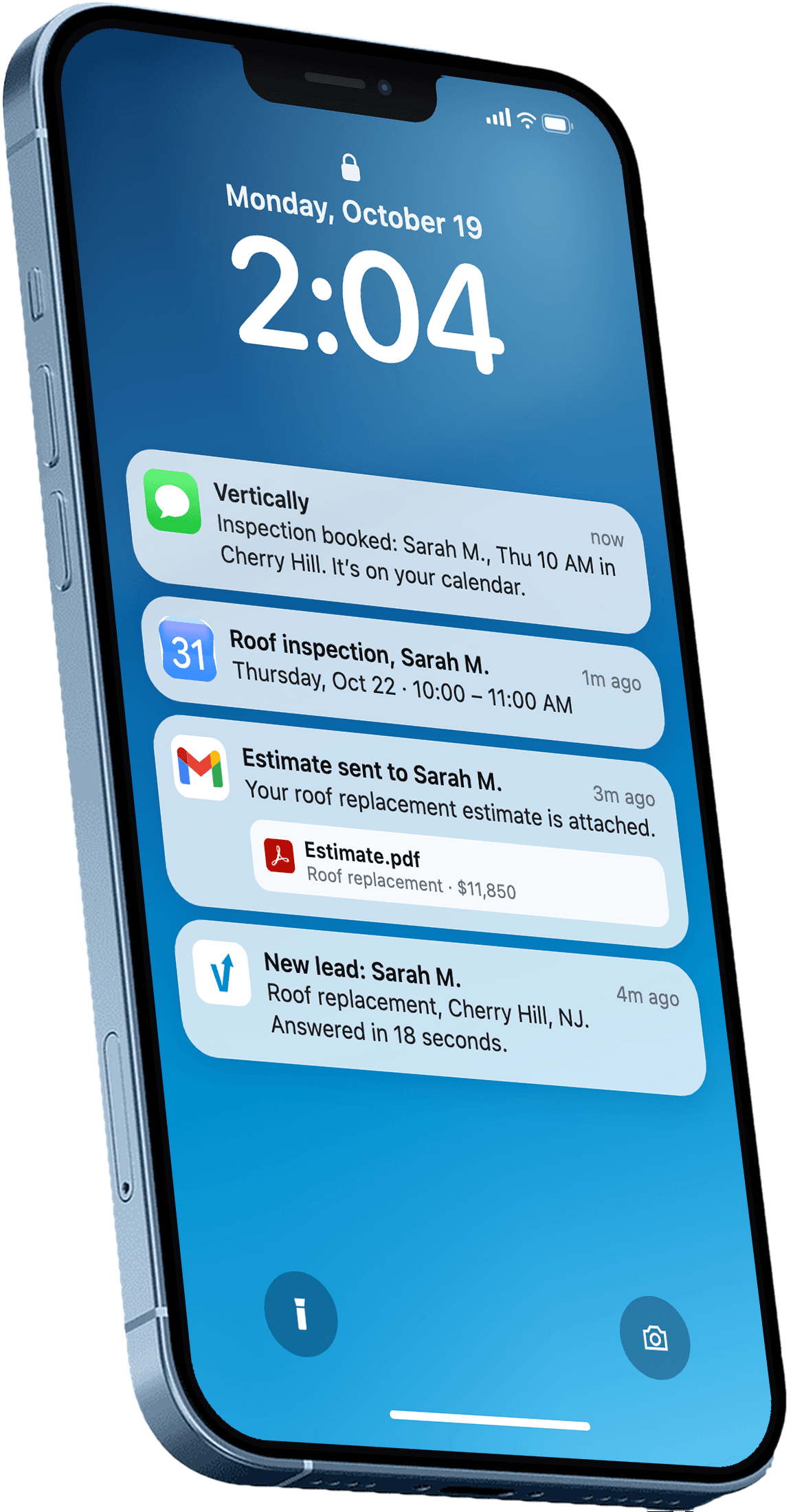
If a quoting setup built from your own price list fits how you work, Vertically offers a free 30-day trial with no contract or credit card. Its quote page builds the estimate from your labor rates, materials and markups, and sends it instantly by email with a branded PDF.
Related reading: roofing quote software that builds the estimate from your price list.
Recommendation
Before you turn anything on, decide your ceiling, your exclusions and the price you would stand behind without seeing the roof. Then test one service and compare the instant number with your real invoice. To see how a price-list quote is set up in practice, read how to set up quote software with your own price list and what roofing estimate software does and what to check. For a view of what satellite tools can and cannot see, read what AI roof calculators measure and what they can't. If you want your quote page built from your own rates, you can book a free systems audit and we will walk through your current pricing with you.
Frequently asked questions
How accurate are instant roof quotes?
Accuracy varies with the tool and the roof. Satellite measurements can estimate area reasonably well, but homeowner-selected pitch and materials often cause gaps, and conditions such as decking damage or extra layers cannot be seen from imagery. Treat an instant quote as a range that the inspection will confirm or revise.
Do instant roof quotes replace an inspection?
No. Instant quotes are designed to start a conversation and book a site visit. The final price should come after someone has looked at the roof, because hidden damage, complexity and code requirements change the cost.
Should a roofing website show prices?
Many roofers choose to show a price range because it can filter out buyers who cannot afford the work and set expectations early. A range that is too narrow or optimistic can anchor homeowners low, so the range and its exclusions should be chosen carefully.
What is a ceiling for instant quoting?
A ceiling is a dollar amount or job type above which the tool stops giving an instant number. Instead the homeowner receives a message that more information is needed. It protects you from misquoting very large or complex jobs.
How is a price-list quote different from a satellite estimate?
A satellite estimate measures the roof from imagery and applies pricing assumptions, often including homeowner-chosen options. A price-list quote applies your own labor rates, material costs and markups to the measured area, so the number reflects how you actually price jobs. Both can be fast; what drives the figure differs.
Answer every lead in under 30 seconds.
Vertically replies to your leads, sends the quote, calls them, and books the inspection on your Google Calendar. Free for 30 days. No contract, no credit card.
Keep reading
- GuideRoofing Quote Software With Your Own Price ListSee how roofing quote software with your own price list keeps instant estimates accurate, and why a ceiling for big jobs protects your margins.Read more
- GuideRoofing Estimate Software: What It Does and What to CheckLearn what roofing estimate software does, how it builds a quote from your own prices, and what to check before you choose a roofing estimate software tool.Read more
- GuideAI Roof Calculator: What It Measures and What It Can'tHow an AI roof calculator estimates roof size and cost from aerial imagery, where it falls short, and how roofers should use one to quote faster.Read more