Answering Calls While on a Roof: 5 Options Compared
How to answer calls while on a roof: compare voicemail, live answering, AI receptionists and callbacks for roofers, and what each costs in missed jobs.
By Bogdan Stere
· 6 min read
On this page
Vertically, which publishes this blog, makes one of the products discussed below, so weigh that when you read it.
If you are on a steep pitch with a nail gun going, you cannot answer your phone safely. The question is how to answer calls while on a roof without losing the job to whoever picks up next. Homeowners rarely wait. After a storm or a leak, they call several roofers, and the first company that answers often gets the inspection. The options below are the realistic ones for a solo roofer or small crew.
Why calls get missed on a roof
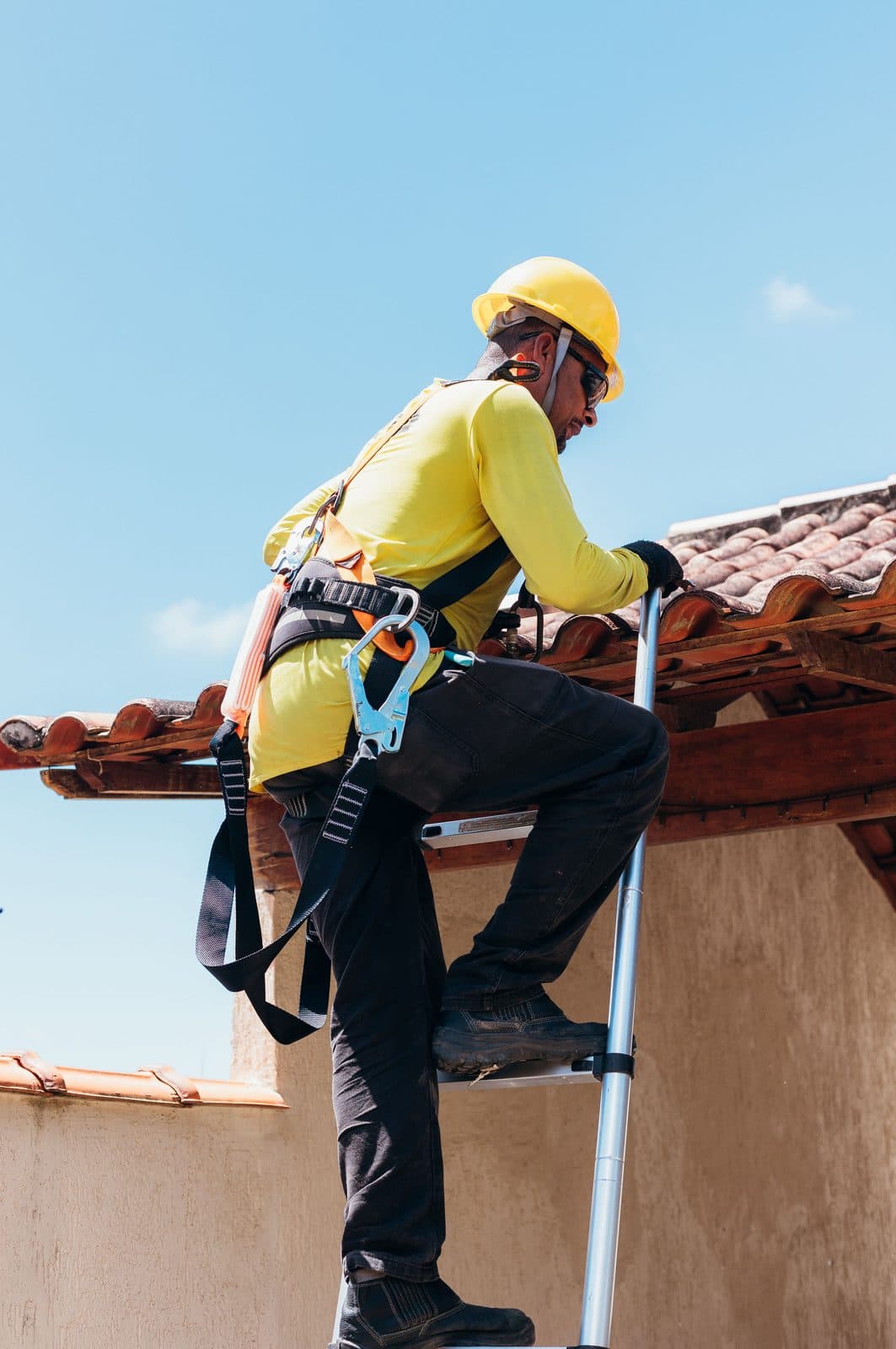
Most missed calls are not a sign of poor service. They happen because the roofer is 20 or 30 feet up and cannot take a call. That is a safety rule, not a flaw in your business.
Homeowners know this and call more than one company. com/resources/phone-setup/roofer). Your job is to make sure the caller reaches a useful answer, not just a dead end.
When a caller reaches voicemail and does not leave a message, they may call someone else. LynkedUp Pro's guide to after-hours coverage describes a homeowner with a water stain who calls the first number, gets voicemail, and calls a second number. Whoever answers that second call often gets the inspection.
Why homeowners call several roofers at once
A leak or hail damage feels urgent to the homeowner, and they have no way to judge quality yet. Calling several companies is the fastest way to find someone who can come out. That means your phone coverage competes directly with every other roofer in your area, on speed as much as on skill.
Five ways to handle calls while on a roof
Here are the five options roofers actually use.
1. Voicemail with a clear greeting
Voicemail is free and always on. Its weakness is that urgent callers may not leave a message and may call the next company instead. LynkedUp Pro's guide describes this scenario, in which the homeowner does not leave a message and calls the second number.
A good greeting still matters, because it tells the caller what to leave. Sample greetings from SkipCalls ask callers for their name, address and problem type, and give a realistic callback window. SkipCalls' voicemail scripts for roofers include a standard greeting that names the company and asks for address and problem type.
Cost: free.
2. Live remote or after-hours answering service
A live answering service puts a person on the line. That helps with tone and judgment on unusual calls. Many services bill per minute or per call, and their coverage varies. LynkedUp Pro's comparison notes that traditional answering services often take messages only and re-type them later, while live remote receptionists may cost extra after hours.
Cost: often a monthly fee or per-minute charge, which can rise during surges. Check how billing works during a storm before you sign.
3. AI receptionist that answers and captures details
An AI receptionist answers the call, asks the roofing questions, and captures the details. Call to AI describes this as a system that answers 24/7, captures name, number, address and issue type, and sends a summary after each call. Good setups also separate urgent calls, like an active leak, from routine estimate requests.
Cost: usually a subscription. AI receptionists can answer calls in parallel, which matters during storm spikes.
4. Hybrid: AI first, people for escalations
A hybrid sends routine calls to the AI and passes unusual or urgent calls to a person on call. This suits a company that wants 24/7 coverage without a staff member on the phone at all hours. SkipCalls recommends a call flow where the system answers immediately, routes by need, and escalates active leaks to an on-call person.
Cost: a subscription plus staff time for escalations.
5. Callbacks on a fixed schedule
A callback plan is a discipline, not a tool. You check messages at set times, such as during breaks and at the end of the day, and return calls inside a window you can keep. SkipCalls' sample greeting promises a callback within 1 to 3 hours in normal weeks, and recommends a 24 to 48 hour window during storm spikes.
Cost: your time, set aside in breaks and at the end of the day.
Comparing the options side by side
| Option | Cost model | After-hours coverage | Does the caller reach a person or system live? | Lead capture |
|---|---|---|---|---|
| Voicemail | Free | Always on, nobody answers | No | Only if the caller leaves a message |
| Live remote receptionist | Monthly fee or hourly, often extra after hours | Usually business hours | Yes, a person | Manual notes |
| Answering service | Per minute or per call | Often 24/7 | Yes, a person | Messages re-typed later |
| AI receptionist | Usually a subscription | 24/7, including weekends | Yes, a system | Automatic summary with the details |
| Hybrid | Subscription plus staff time | 24/7 | Yes, system first, person when needed | Automatic |
Before you choose, check four things. Who handles emergencies, and what counts as one? How do details reach your job list or CRM? Does the service book inspections against your real calendar, or just take messages? And what happens to the bill during a storm? LynkedUp Pro's guide covers the questions to ask any vendor before you sign. For a fuller look at pricing structures, see per minute vs per call answering service pricing for roofers.
Choosing for a solo roofer or small crew
For a solo roofer, the right choice is the one that captures every lead, not just the ones that reach you live. A voicemail that nobody leaves is not capture.
Start with a baseline you can set up today. Record a greeting that says you are on a roof and asks for the caller's name, address, problem type and whether water is coming in. Then pick the option that covers your busiest windows, usually evenings, weekends and storm days.
If you want to compare vendors, roofing virtual assistants and AI receptionists are different tools, and the difference matters for a small company. For a checklist to use when you evaluate a service, see what to look for in a roofing answering service before you sign.
Where Vertically fits
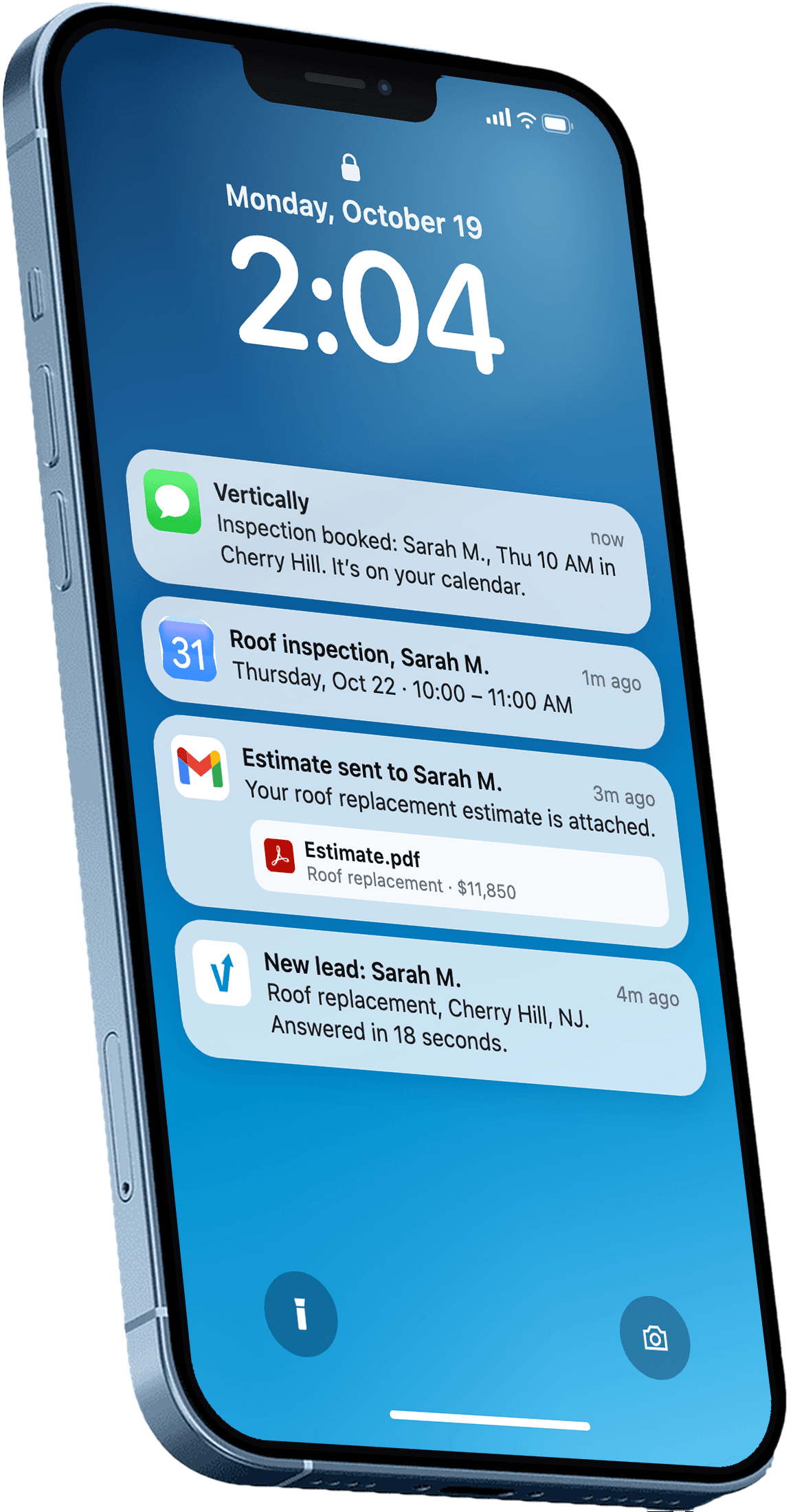
Vertically does not answer inbound phone calls. It does not pick up your business line, and it is not a receptionist. It responds to web quote requests instead: the homeowner gets an instant quote by email, and an AI call about 5 minutes later, which can book an inspection on your calendar. If your leads come from your website rather than the phone, that is a different problem from answering the phone on a roof. For that, see the roofing answering service comparison for instant lead response.
What to do this week
- Record a voicemail greeting that names your company, says you are on a roof, and asks for address and problem type.
- Count the missed calls from your last storm or busiest week, using your phone log. That number tells you how much a single option is worth to you.
- Choose one option to test for 30 days, and check how many inspections it books against last month.
Next step
Vertically offers a free 30-day trial with no contract and no credit card, so you can see how web quote requests move from instant quote to a booked inspection on your own calendar. If you want a walkthrough first, book a free systems audit with Vertically.
Frequently asked questions
Can a roofer safely answer the phone while working?
On a steep pitch or while using power tools, answering the phone is a safety risk, so most roofers should not try. Voicemail, a system that answers for you, or a callback schedule lets you handle calls without reaching for your phone on the roof. Make the choice based on your own safety rules and the work you are doing that day.
Is voicemail enough for roofing calls?
Voicemail is free and always on, but urgent callers may not leave a message and may call the next roofer instead. A clear greeting that asks for address and problem type helps the callers who do leave messages. For most small companies, voicemail on its own leaves too many jobs uncaptured.
How much does an answering service cost for a roofer?
Pricing varies by vendor and model. Some services charge per minute, some per call, and others charge a monthly subscription, and per-minute charges can rise during storms. Ask any vendor how billing works during a surge and whether emergencies cost extra before you sign.
Do AI receptionists work for roofing companies?
An AI receptionist can answer calls around the clock, collect the caller's name, address and problem type, and help sort urgent calls from routine ones. It should not inspect a roof, name a cause or give a price, so check how it handles those requests. Test it on a few real calls before relying on it for a storm.
Answer every lead in under 30 seconds.
Vertically replies to your leads, sends the quote, calls them, and books the inspection on your Google Calendar. Free for 30 days. No contract, no credit card.
Keep reading
- GuidePer Minute vs Per Call Answering Service Pricing for RoofersCompare per-minute, per-call and flat-rate answering service pricing for roofers, with storm-season overage math and what to check before you sign.Read more
- GuideRoofing Virtual Assistant vs AI Receptionist: Which One Fits a Small Roofing Company?Roofing virtual assistant or AI receptionist? An honest comparison of cost structure, hours, speed, and what each can do, and when each is the better choice.Read more
- GuideWhat to Look for in a Roofing Answering Service Before You SignA practical checklist for choosing an answering service for roofing companies: coverage, speed, booking, quoting, handoff, pricing, contracts, data access.Read more