Phone Scripts for Roofing Call Intake: A Checklist
Use this checklist to build phone scripts for roofing call intake: greeting, required questions, urgency rules, and a follow-up text your team can use today.
By Bogdan Stere
· 6 min read

On this page
Phone scripts for roofing call intake work best when they are short, consistent, and written for the calls you actually get: leaks, storm damage, repair requests, and the occasional commercial property manager. A good script makes sure every caller gives you the same core details, so nobody has to rely on memory after a busy day on the roof. This checklist walks through the parts of a script you need, the questions to include, how to set urgency rules, and a follow-up text you can copy.
What a Phone Script for Roofing Call Intake Needs to Do
A roofing call intake script has one job: capture enough information to decide what happens next. A useful minimum record includes who is calling and the best callback number, the service address, whether the property is residential or commercial, whether the caller owns, manages, rents, or represents it, what they can see from a safe location, when the issue started, and whether water is entering an occupied area.
Keep the script short enough that anyone on your team can read it on any call without losing the flow. Break a call into four parts: greeting, intake questions, urgency rules, and a follow-up text. That structure is a useful starting point even if you write the wording yourself.
The core details every call must capture
Start with the basics that let you call back: caller name, callback number, and an email address for confirmations and photo requests. Then capture the service address, including gate codes or access notes. A caller who does not own the property may be a tenant, property manager, or buyer, and that changes who can approve work, so ask the caller's role directly.
Why a checklist beats memory
When calls come in during a storm week, people skip questions. A printed or saved checklist means the receptionist, the office manager, or the owner asks the same things in the same order. It also makes your weekly review possible, because every record has the same fields.
Checklist: Required Intake Questions for Roof Calls
Use these as the minimum questions on every roofing call. Adjust the wording to fit your voice, but keep the information the same.
- What is the service address, and is it a home or a commercial building?
- Are you the owner, a tenant, a property manager, or someone acting for the owner?
- What is the best callback number, and is there an alternate?
- What kind of service do you need: leak, storm inspection, repair, replacement, estimate, or a question about an existing job?
- What can you see from where you are standing, without going on the roof or into the attic?
- When did you first notice the problem, and is it getting worse?
- Is water currently coming into the building, and which rooms are affected?
- Is there anything unsafe right now, such as a downed line, sparks, smoke, a sagging ceiling, or falling material?
- Is there a locked gate, pet, or access restriction we should know about?
- Do you have an insurance claim open? (Record the answer only. Do not promise coverage.)
- When is a good time for us to call or inspect?
- How did you hear about us?
Residential versus commercial and ownership
Commercial calls often involve HOAs, property managers, or multifamily owners who need a different workflow and a different decision-maker. Mark the property type in your record so the right person follows up. Ask who approves work, because a caller who cannot sign off should not be the only contact.
Leak, storm and damage questions
For leaks, the most useful details are timing and location: when it started, whether it is active, and which rooms are affected. For storm calls, ask what the caller can observe from the ground and whether anything was visible after the storm. Record what they describe without interpreting it. You are gathering context for the inspection, not diagnosing the problem over the phone.
Set Urgency Rules and Safety Routing
Urgency rules tell your team which calls need a person right away. Write them down so the decision does not depend on who answers.
When to flag a call as urgent
Flag a call when water is actively entering an occupied space, when a ceiling is sagging, or when a leak is near electrical equipment. These are the calls where a delay causes real damage, and they should go to a person as soon as possible during your business hours.
When to send the caller to emergency services
Some situations are not a roofing call at all. Downed power lines, fire, smoke, or a structure that appears to be moving or collapsing should go to emergency services first. Intake staff should not ask callers to climb onto a roof, enter a damaged attic, touch wet electrical equipment, or inspect anything near a power line.
Your script should never give repair diagnoses over the phone, and it should never tell a caller it is safe to go up on the roof. Keep those limits written into the urgency section so a new team member does not improvise.
Write the Greeting and Follow-Up Text
A greeting that confirms the company and the next step
Open with your company name, a brief thank-you, and a clear statement of what happens next. For example: "Thanks for calling [Company]. I'll ask a few quick questions so we can get you on the schedule. If anything is urgent, tell me now." That sets expectations and lets urgent callers speak up early.
A follow-up text template
After the call, send a text that confirms the callback window and the information you still need. Keep it short:
"Hi [First name], thanks for calling [Company]. We have your request for [service type] at [address]. We'll call you back by [time or window]. If the situation changes, such as water coming into a room, call us at [number].
This closes the loop, so the caller is not left wondering whether anyone received the message.
Track Whether the Script Works
Once the script is in use, track a few simple numbers each week: completed intake forms, urgent calls flagged, and calls that reached a booked inspection. You do not need special software for this. A shared spreadsheet with one row per call is enough.
Review the list once a week. If one question keeps producing unclear answers, rewrite it. If urgent calls are being missed, tighten the urgency section. If callers keep asking the same thing, add it to the greeting.
Where Automation Fits After Intake
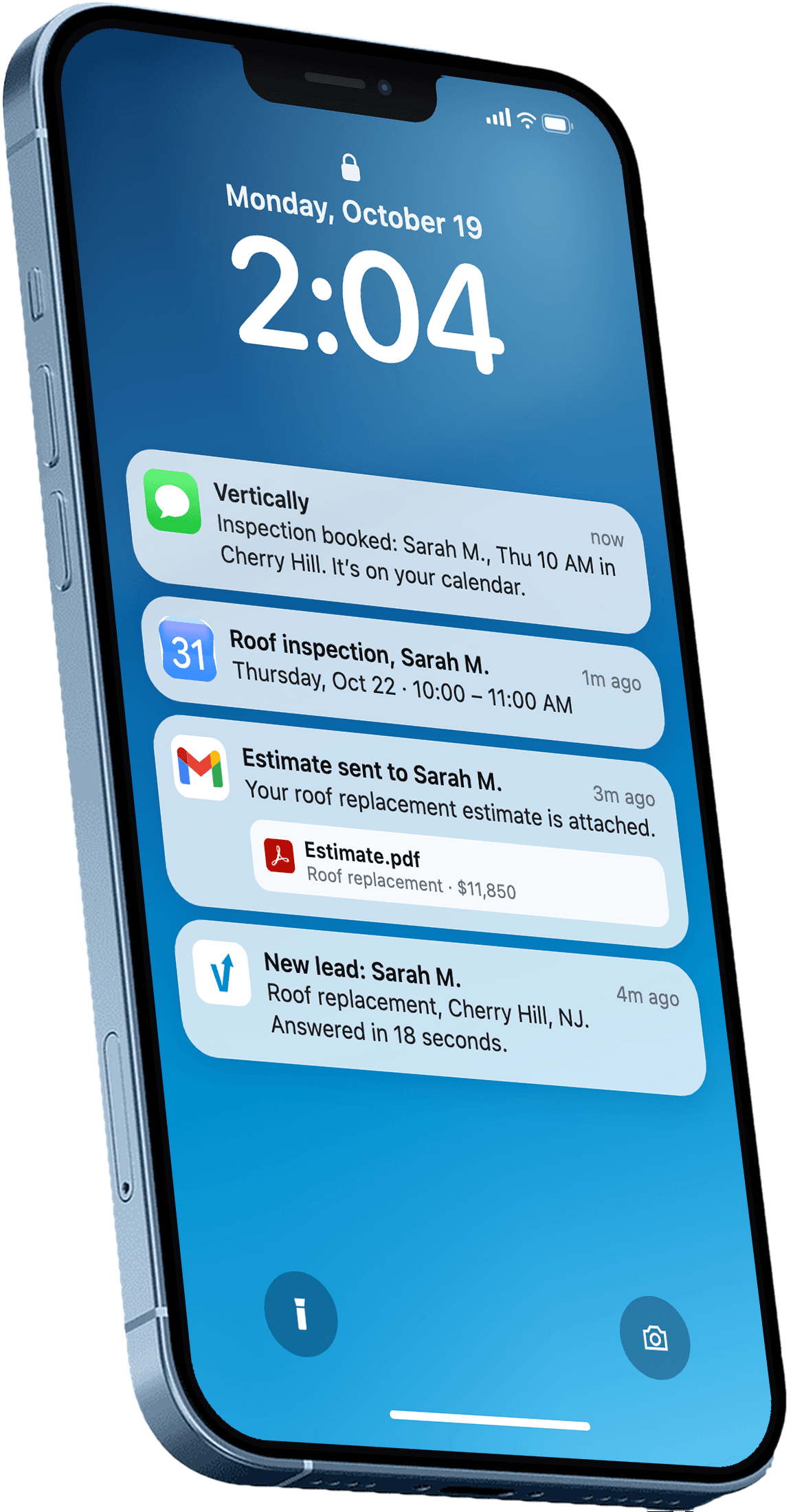
The intake call is only one part of the lead. Many web quote requests come in outside business hours, and the first few minutes after a request matter. Vertically does not answer inbound phone calls. It responds to web quote requests with an instant quote by email and text, then an AI call about 5 minutes later to book an inspection, so fewer leads go cold. You can read more on the roofing answering service product page, and if you are comparing approaches, human vs AI call answering for contractors covers the tradeoffs. For a broader look at what to check before hiring a service, see what to look for in a roofing answering service.
Recommendation for This Week
Write your intake questions down today, using the checklist above. Then send the follow-up text template to whoever answers your phone, and review your first ten records together at the end of the week.
Want help turning web leads into booked inspections faster? Try Vertically free for 30 days. There is no contract and no credit card, and you can see how an instant quote and a 5-minute AI call handle the leads that come in after your intake call.
Frequently asked questions
What questions should a roofing call intake script always ask?
Every script should capture the caller's name, callback number, service address, and whether they own, manage, or rent the property. It should also ask what the caller can see from a safe location, when the issue started, and whether water is entering an occupied area. Always confirm whether there are immediate hazards such as downed lines or fire.
How do I tell if a roofing call is an emergency?
Treat a call as urgent when water is actively coming into an occupied space, a ceiling is sagging, or a leak is near electrical equipment. Any situation involving downed power lines, fire, smoke, or a structure that appears to be collapsing should go to emergency services first. Write these triggers into your script so the decision does not depend on who answers.
Should I read a script word for word on every call?
Use the script as a checklist of questions and required details, but adjust the wording so the call sounds natural. The important part is that every caller gets the same information requests in the same order. Avoid reading the urgency and safety lines in a way that sounds scripted, since callers in a hurry need to understand them quickly.
How long should a roofing intake call take?
A typical intake call should be short enough to capture the required fields without making the caller feel interrogated. Keep the questions focused on the address, the problem, the urgency, and a callback window. If the caller needs more detailed discussion, schedule that for the inspection or a follow-up call.
Can an answering service follow my intake script?
An answering service can follow a script for questions and routing if you give it clear instructions, but you should review how it handles urgent calls and safety situations before you rely on it. Vertically does not answer inbound phone calls, so it is not a substitute for your intake process. Check any service's contract and call-handling rules carefully before you sign.
Answer every lead in under 30 seconds.
Vertically replies to your leads, sends the quote, calls them, and books the inspection on your Google Calendar. Free for 30 days. No contract, no credit card.
Keep reading
- GuideHuman vs AI Call Answering for Contractors: 6 MistakesAvoid the costly mistakes roofers make when choosing human vs AI call answering for contractors, from storm-surge gaps to unclear pricing and handoffs.Read more
- GuideWhat to Look for in a Roofing Answering Service Before You SignA practical checklist for choosing an answering service for roofing companies: coverage, speed, booking, quoting, handoff, pricing, contracts, data access.Read more