Roofing Follow Up Sequence for Leads That Go Quiet
How a 28-day roofing follow-up sequence for leads that go quiet works, what it sends, and how to set it up so no quote is forgotten.
By Toby Karamoutchev
· 5 min read
A roofing lead that gets a quote and then goes silent is not necessarily a lost job. It is a lead that needs a steady, polite reason to come back. A roofing follow up sequence for leads that go quiet keeps that conversation alive over several weeks, so the homeowner has a clear next step each time instead of a quote that gets buried in an inbox. This post explains how that kind of sequence works, what it sends, and what to check before you turn it on.
Why roofing leads go quiet after a quote
A quote may go unanswered for many reasons, such as comparing prices or waiting on a decision. That silence is not always a clear no.
The risk is timing. A quote sitting unanswered is easy to lose to whichever roofer follows up next. If you only follow up when you remember to, the leads that matter most often slip through.
The gap between a quote and a booked inspection
The most valuable stretch of a roofing lead is the gap between the quote and the booked inspection. Closing that gap means reaching the homeowner again, with something useful, before they lose interest or hire someone else.
How a 28-day follow-up sequence works
A follow-up sequence is a set of messages sent on a schedule, rather than one-off reminders you type by hand. With Vertically, the sequence sends messages to the lead every several days over 28 days, and it stops once the lead books an inspection or unsubscribes.
Messages every several days
Spacing matters more than volume. Messages every several days give the homeowner time to think without the lead going cold. The sequence runs for 28 days, giving the lead several weeks to decide. The messages are automated and sent on schedule without you typing each one, even in a busy week when you are on a roof.
When the sequence stops
The sequence ends in one of two ways: the lead books an inspection, or the lead unsubscribes. Either outcome is clean. You are not left wondering whether someone is still in the pipeline or whether you accidentally kept messaging a homeowner who already hired another company.
What happens in the first five minutes and the call
The sequence runs alongside the first contact, so the lead is not waiting on a reply to start.
Quote, text, then an AI call about 5 minutes later
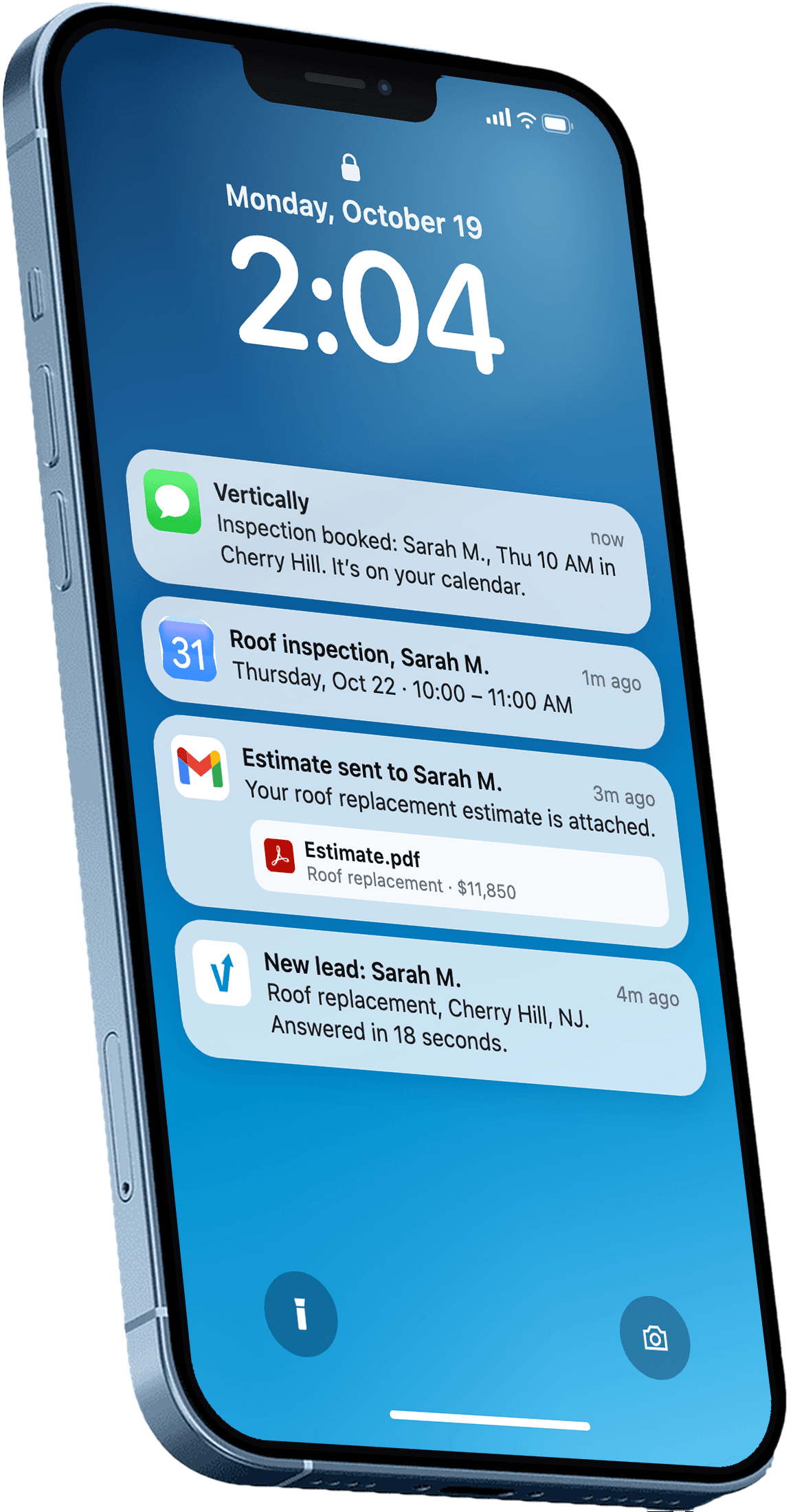
When a homeowner submits a request, they get an instant quote by email, with a branded PDF that carries your details and sends from your own email. They also get a text saying the quote is in their inbox, with information about your company and how to reach you.
About 5 minutes after the request, an AI agent calls the homeowner on your behalf, using your company name and the details of their request. It is connected to your Google Calendar and can book the inspection directly. You get a confirmation text, and the homeowner gets an email with the inspection details.
Setting up a follow-up process you can trust
Automation only helps if the inputs are right. Check these before you turn it on.
What to check before you turn it on
- Your pricing ceiling. Set the threshold for instant quoting. If a job totals above it, the homeowner receives an immediate email saying more information is needed, so very large jobs are not misquoted.
- Your service questions. The quote page asks questions based on what you offer, so make sure they match your actual work.
- Your calendar. The AI agent can only book what your Google Calendar allows, so keep your availability current.
Using the lead breakdown to track status
You receive a copy of each quote with a full lead breakdown and a mini CRM inside the email. Use it to mark each lead's status as it moves. That way, when a homeowner replies or books, you update the record once and the sequence reflects where things stand.
For a closer look at that email, see what a roofer sees in the roofing lead breakdown email.
Measuring whether the follow-up is working
You do not need a complicated dashboard. You need to know which quiet leads came back.
What the weekly report shows
Every Monday you get a weekly report covering inspections, calls, quotes and requests. Read it with one question in mind: how many leads that were quiet last month booked an inspection this month?
Compare that with your own numbers from before you had a sequence. Use your own data rather than industry averages, since your territory, job mix and pricing will differ from anyone else's.
If you want a schedule to compare against, a practical roofing lead follow-up cadence schedule walks through spacing options you can test.
Where Vertically fits
Vertically is the author's product. It runs from your website: if you have one, it sets up a quote page on a subdomain linked from your site, and if you don't, it builds a custom website that includes the full system.
One client, Arias Roofing & Siding in Sewell, NJ, saw leads go from 1-3 a month, mostly referrals, to 7-10 a month from the website. Their reply time dropped from 24-48 hours to under 30 seconds, and jobs went from about 1 a month to about 5. That is one client's result, not a guarantee for your business.
Whether you use a tool or not, the core idea holds: a quiet lead needs a planned, repeated reason to come back, and you need a way to see which ones did.
Related reading: how to get more roofing leads.
Recommendation for this week
Pull your last 20 quotes and sort them by status. Count how many went quiet and how many were ever followed up after the first week. That number tells you how much a structured follow-up would change your pipeline. Then decide on your spacing, and start a free 30-day trial with no contract and no credit card to have your quote page and 28-day follow-up sequence set up from your website. Book a free systems audit to see how it would fit your current quote process.
Frequently asked questions
How long should I keep following up with a roofing lead?
Vertically's sequence runs over 28 days and stops once a lead books or unsubscribes. After that, the right move depends on your own data: check which leads booked from later follow-ups and adjust your timing.
Will homeowners get annoyed by repeated roofing follow-up messages?
They can, if the messages are frequent or pushy. Spacing them every several days and making each one useful reduces that risk. Every message should include a clear way to book or unsubscribe.
What is the difference between a follow-up sequence and a phone call?
A sequence is a set of scheduled messages that runs without you typing each one. A phone call is a live conversation you make yourself. Vertically's sequence does not replace your calls; it keeps leads warm between them.
Can I stop a lead from getting follow-up messages?
Yes. Homeowners can unsubscribe, and the sequence also stops when they book an inspection. You can also update the lead's status in your mini CRM to keep your own records accurate.
What do I need before I turn on automated follow-up for roofing leads?
Set your pricing ceiling for instant quoting, make sure your quote questions match the work you actually do, and keep your Google Calendar availability current. Decide how you will mark lead status so the sequence and your records stay in step.
Answer every lead in under 30 seconds.
Vertically replies to your leads, sends the quote, calls them, and books the inspection on your Google Calendar. Free for 30 days. No contract, no credit card.
Keep reading
- GuideWhat a Roofer Sees in the Roofing Lead Breakdown EmailA walkthrough of the roofing lead breakdown email and mini CRM: what the email contains, how to mark lead status, and what to check each morning.Read more
- GuideRoofing Lead Follow-Up Cadence: A Practical ScheduleBuild a roofing lead follow-up cadence with timing, channels, message goals, stop rules, and tracking to see which touches book inspections.Read more
- GuideHow to Get More Roofing Leads (and Stop Losing the Ones You Have)How to get more roofing leads: practical sources, then why speed to lead and follow-up decide how many you win, with a real roofing case study.Read more