Roofing Work During Slow Storm Season: 5 Steps Now
Storm claims are down. Here is how to keep roofing work flowing during slow storm season without overbuilding your crew or overhead.
By Bogdan Stere
· 3 min read

Roofing-related insurance claims fell 11.9% through August compared with the same period in 2025, according to Verisk data reported by [Roofing Contractor](https://www.roofingcontractor.Contractors at the 2026 Win the Storm event in Dallas described the same quiet stretch, though activity varied sharply by market. If your phone has slowed, the question is not whether storm work will return, but what you do with your crew and overhead until it does. Roofing work during slow storm season depends on a plan you set now, not a rebound you hope for.
What the slowdown means for your roofing business this week
National headlines are a poor guide to your own pipeline. Pull your lead count and quote mix for the last 60 days and compare them with the same period last year. If storm-driven claims were most of your volume, you need a different plan than a shop that mostly does retail replacement.
Storm work is uneven by region. The Roofing Contractor interviews noted that one contractor called his season "too quiet" after only some rain, while others said their first year went well because they stayed consistent. Your local numbers matter more than the national trend.
Add related exterior work that keeps existing crews busy
Several contractors interviewed at Win the Storm said they filled gaps with related exterior jobs. [Roofing Contractor](https://www.roofingcontractor.
Gutters, fascia and soffits
These jobs sit right next to your roof work. Your crew already has the ladders, the access setup and the know-how to work at the roofline. Offer gutter cleaning and repair to existing customers first, since they already trust you.
Siding
Siding uses many of the same skills and access equipment, but the sales conversation differs. Quote it as a separate project so it does not pull attention from your core roofing work. Only add a service line if your crew can do it well.
Protect overhead when capacity outruns demand
Floridaroof describes a common problem: companies built for a big storm cycle can carry too much overhead when normal demand returns. Its advice is to scale down deliberately rather than wait for cash flow to force the decision. Consider consolidating roles or reassigning people to service and sales before cutting headcount.
Cut or delay fixed costs before you cut prices. ServiceTitan notes that prices are naturally lower in slow seasons and that roofers are sometimes forced to offer discounts to win the limited jobs. Review subscriptions, equipment leases and insurance tiers first.
Keep a steady pipeline of roofing jobs between storms
Slow months are usually a pipeline problem more than a weather problem. The Diamond Group argues that companies depending only on storm demand, referrals and door knocking have nothing underneath when the season ends. Build channels that work in any month.
Start with two actions this week:
- Call or text every quote from the last 90 days that did not book, and ask what would make them move forward.
- Ask recent past customers whether they want a maintenance check, gutter cleaning or a repair estimate. ServiceTitan suggests maintenance agreements as a way to keep customers in your system between large projects.
For more ideas, read roofing leads during a slowdown and how to get roofing leads.
Use the slow weeks to shore up your lead system
Hook Agency advises contractors in storm-drought markets to focus on visibility, using relationship marketing and local search to bring calls even when skies are clear. Hook Agency makes that point. Reply to inbound requests as fast as you can.
Set up your Google Business Profile and local service pages while demand is low, so you are found when it returns. The steps are in how to set up Google Business Profile for roofing.
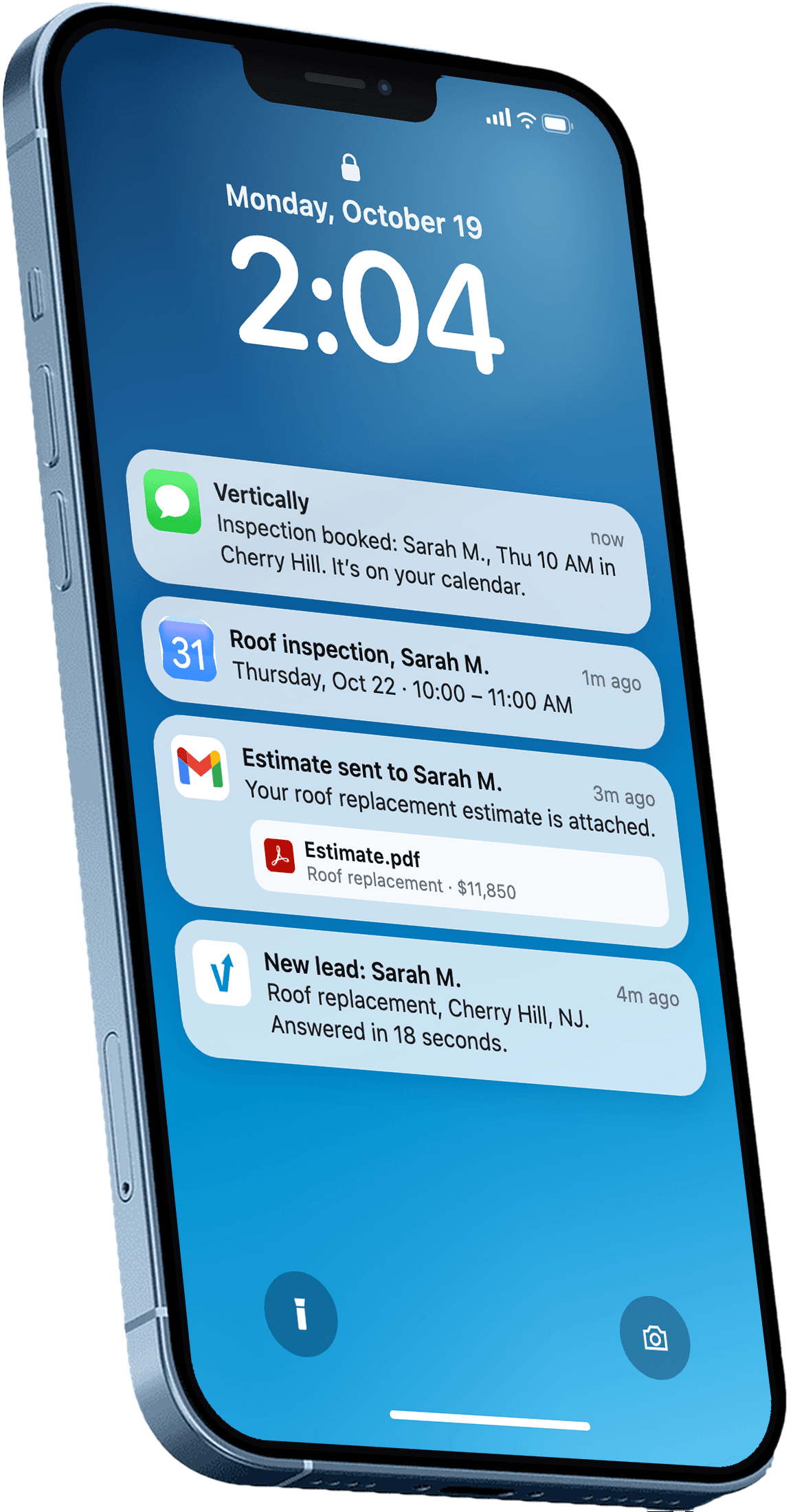
If your website collects quote requests, measure how long it takes you to respond. Vertically is the author's product. It answers every web quote request instantly with an estimate, a text, and an AI call about 5 minutes later, so slow-season leads do not go cold. Its 30-day free trial has no contract and no credit card.
Related reading: how to get more roofing leads.
Recommendation for this week
Do the numbers first: lead count, quote mix and fixed costs. Then pick one related service to test, call every stale quote, and fix your local listings. Before you add crew or equipment, make sure the work already in front of you is being answered fast.
Book a free systems audit if you want to talk through your quote flow.
Frequently asked questions
How do I find roofing work when storm activity drops?
Start with your own lead count and quote mix rather than national headlines. Call quotes that did not book, ask past customers about maintenance and repairs, and tighten your local online listings so you are found when local demand picks up.
Should a roofing company offer gutters or siding?
It can make sense if the work uses the same crew skills and access equipment you already own. Gutters, fascia and soffits are the closest fit. Only add siding if your crew can deliver it well, and quote it separately so it does not distract from core roofing jobs.
How much overhead should a roofer cut during a slow storm season?
There is no fixed percentage, because it depends on your market and your fixed costs. Floridaroof recommends scaling down deliberately, starting with consolidating roles and reviewing fixed costs, rather than waiting for cash flow to force cuts.
How do I keep roofing leads coming between storms?
Build channels that do not depend on weather, such as maintenance agreements, follow-ups on unbooked quotes, and local search visibility. Respond quickly to every inbound request, since slow periods are when a fast reply matters most to win the work you can get.
Answer every lead in under 30 seconds.
Vertically replies to your leads, sends the quote, calls them, and books the inspection on your Google Calendar. Free for 30 days. No contract, no credit card.
Keep reading
- GuideRoofing Leads During a Slowdown: Your Next MoveARMA reported U.S. shingle shipments fell 13% in Q3 2026. Here is how to protect roofing leads during a slowdown, with steps to take this week.Read more
- GuideHow to Get Roofing Leads: 10 Steps That WorkHow to get roofing leads: a practical checklist covering referrals, Google reviews, local search, partnerships and fast follow-up for small roofing companies.Read more
- GuideHow to Set Up Google Business Profile Roofing: StepsHow to set up Google Business Profile roofing listings: verification, category, service area, photos and reviews, plus answers roofers ask most.Read more